
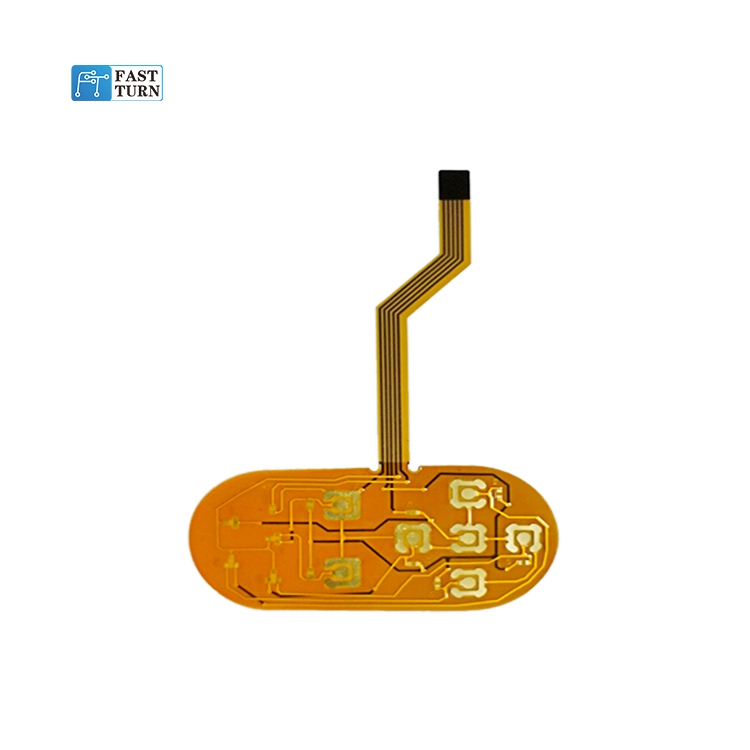
With the increasing demand for compact, intelligent, and efficient industrial systems, Flexible Printed Circuits (FPC) have become a core component in modern manufacturing and automation. These lightweight and bendable circuit boards replace bulky wiring harnesses, enabling greater design freedom and improved reliability in harsh industrial environments.
From robotics to factory automation and instrumentation, FPC technology enhances performance and reduces maintenance costs — making it indispensable in the era of Industry 4.0.
1. What Are Flexible Printed Circuits?
Flexible Printed Circuits are thin copper circuits mounted on flexible insulating films such as polyimide. Unlike rigid PCBs, FPCs can bend, fold, or twist, allowing them to fit into compact or dynamic structures. Their flexibility, light weight, and excellent signal integrity make them ideal for high-density and high-speed industrial electronic systems.
2. Why FPCs Are Ideal for Industrial Applications
Industrial environments demand high durability, precision, and reliability. FPCs meet these challenges through several key advantages:
- Flexibility under motion: Perfect for equipment with moving parts or limited installation space.
- Vibration and heat resistance: Designed to perform in demanding industrial conditions.
- Reduced assembly time: Simplifies wiring compared to traditional harnesses.
- Improved electrical performance: Maintains stable signal transmission with minimal interference.
- Customizable design: Can be engineered for unique shapes, pin layouts, and connector interfaces.
These strengths make FPCs a preferred choice for next-generation industrial systems.
3. Industrial Applications of Flexible Printed Circuits
FPCs are increasingly replacing rigid PCBs and wiring harnesses in various industrial applications:
a. Robotics
Robotic systems require reliable connections that can handle repetitive movement. FPCs are ideal for joint connections and sensor systems where durability and flexibility are critical.
b. Automation and Control Equipment
In programmable logic controllers (PLCs), motion control units, and servo drives, FPCs provide compact, efficient internal wiring solutions that maintain performance under vibration and thermal stress.
c. Industrial Sensors
Flexible circuits are widely used in temperature, position, and pressure sensors to achieve miniaturized and durable designs capable of precise data transmission.
d. Displays and Operator Interfaces
Industrial displays, touch panels, and HMIs rely on FPCs for connecting LED modules, backlight systems, and signal boards, ensuring stable performance in 24/7 operations.
e. Power Distribution Systems
FPCs are also used for efficient current transmission in battery management systems and compact power control modules.
4. Future of FPCs in the Industrial Market
As industrial systems evolve toward automation, digitization, and sustainability, the use of FPCs will continue to grow. Future developments include:
- Integration with flexible sensors for smart monitoring.
- Hybrid rigid-flex boards combining mechanical strength and flexibility.
- Advanced materials for higher temperature resistance and longer lifespan.
- Sustainable manufacturing through recyclable substrates and eco-friendly production.
These innovations will strengthen FPC’s position as a cornerstone of industrial electronic design.
5. Darlox – Professional FPC and Cable Assembly Manufacturer
Darlox (Guangzhou Zhijian Electronic Co., Ltd) specializes in designing and manufacturing FPC, FFC, and micro coaxial cable assemblies for industrial, automotive, and medical applications. With precision engineering and strict quality control, Darlox delivers customized FPC solutions that meet the demanding requirements of modern industry — ensuring stable performance, long service life, and rapid turnaround.
Conclusion
Flexible Printed Circuits are driving the future of industrial innovation by offering compact, durable, and efficient connectivity. Whether used in automation systems, robotics, or smart manufacturing, FPC technology empowers engineers to design smaller, smarter, and more reliable industrial equipment.


