
⏱ Typical Lifespan (by application)
| Application Type | Typical Lifespan |
|---|---|
| Light-duty automation | 1–3 million cycles |
| Industrial robots (moderate motion) | 5–10 million cycles |
| High-flex robotic arms (6-axis) | 10–50+ million cycles |
| Continuous torsion applications | 5–20 million torsion cycles |
👉 In real time:
- A cable assembly flexing once per second at 10 million cycles ≈ ~4 months (24/7)
- In typical factory use (8–12 hrs/day), that can extend to 1–3 years
🔧 What Determines Cable Lifespan?
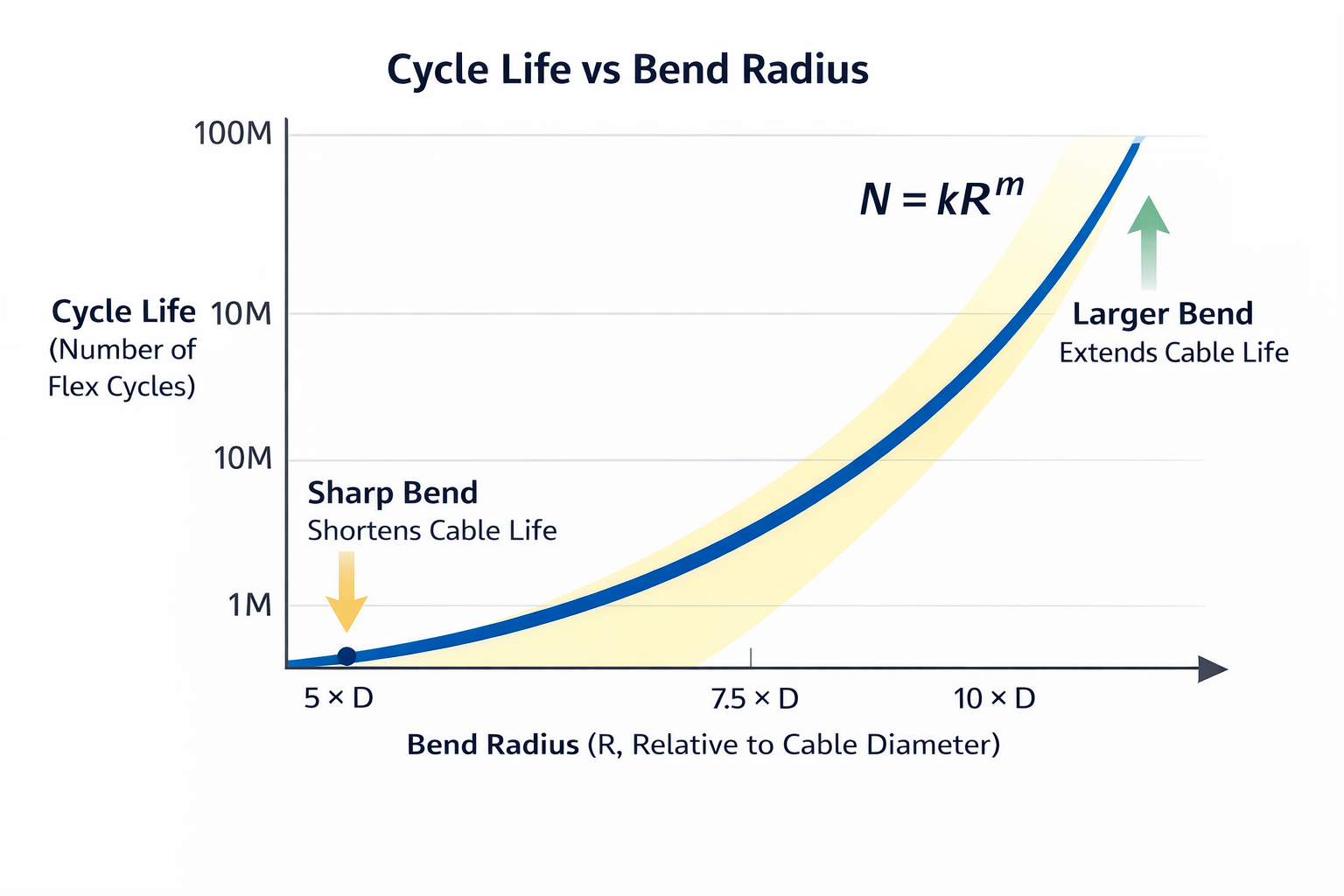
1. Bending Radius (Critical)
- Tight bends = faster failure
- Rule of thumb:
- Standard cable: ≥10× outer diameter
- High-flex cable: ≥5× outer diameter
🔁 2. Motion Type
Different motion stresses cables differently:
- Bending (drag chain) → moderate wear
- Torsion (robot joints) → severe stress
- Continuous twisting (±180°/m) → fastest degradation
👉 Torsion is usually the #1 failure cause in 6-axis robots.
🧪 3. Materials & Construction
High-performance robotic cables use:
- Fine-stranded conductors (Class 6)
- TPE / PUR jackets (better than PVC)
- Low-friction fillers
- Shielding designed for movement
🌡 4. Environment
- High temperature → insulation aging
- Oil/chemicals → jacket degradation
- EMI → signal issues (not physical failure, but functional failure)
⚡ 5. Cable Design Quality
Poor design leads to early failure:
- Uneven stress distribution
- Poor shielding termination
- Inconsistent impedance (for signal cables)
📉 How Robotic Cables Fail
Common failure modes:
- Conductor breakage (internal, invisible)
- Shield fatigue → EMI problems
- Jacket cracking
- Signal degradation before physical break
👉 Important: Electrical failure often happens before mechanical failure
📊 Lifecycle Behavior (Conceptual)
N∝ϵm1
Meaning:
- N = number of cycles to failure
- ϵ = strain (from bending/torsion)
- m = material constant
👉 Small increases in strain can dramatically reduce lifespan
🛠 How to Extend Robotic Cable Life
✅ Design Tips
- Use cables specifically rated for continuous flex / torsion
- Maintain proper bend radius
- Separate power and signal lines when possible
- Use strain relief at connectors
✅ Installation Tips
- Avoid twisting during installation
- Use proper cable routing (energy chains, guides)
- Prevent abrasion and pinch points
✅ Testing
- Flex testing (millions of cycles)
- Torsion testing (± angle cycles)
- Electrical monitoring (continuity, shielding)
🚀 Real-World Insight (What Engineers Do)
High-end robotic systems:
- Specify >20 million cycle-rated cables
- Validate with accelerated lifecycle testing
- Replace cables before failure (predictive maintenance)
📌 Bottom Line
- Robotic cables typically last 1–3 years in real operation
- High-performance designs can exceed 50 million cycles
- Lifespan depends more on motion + design than time
Please follow and like us:


