
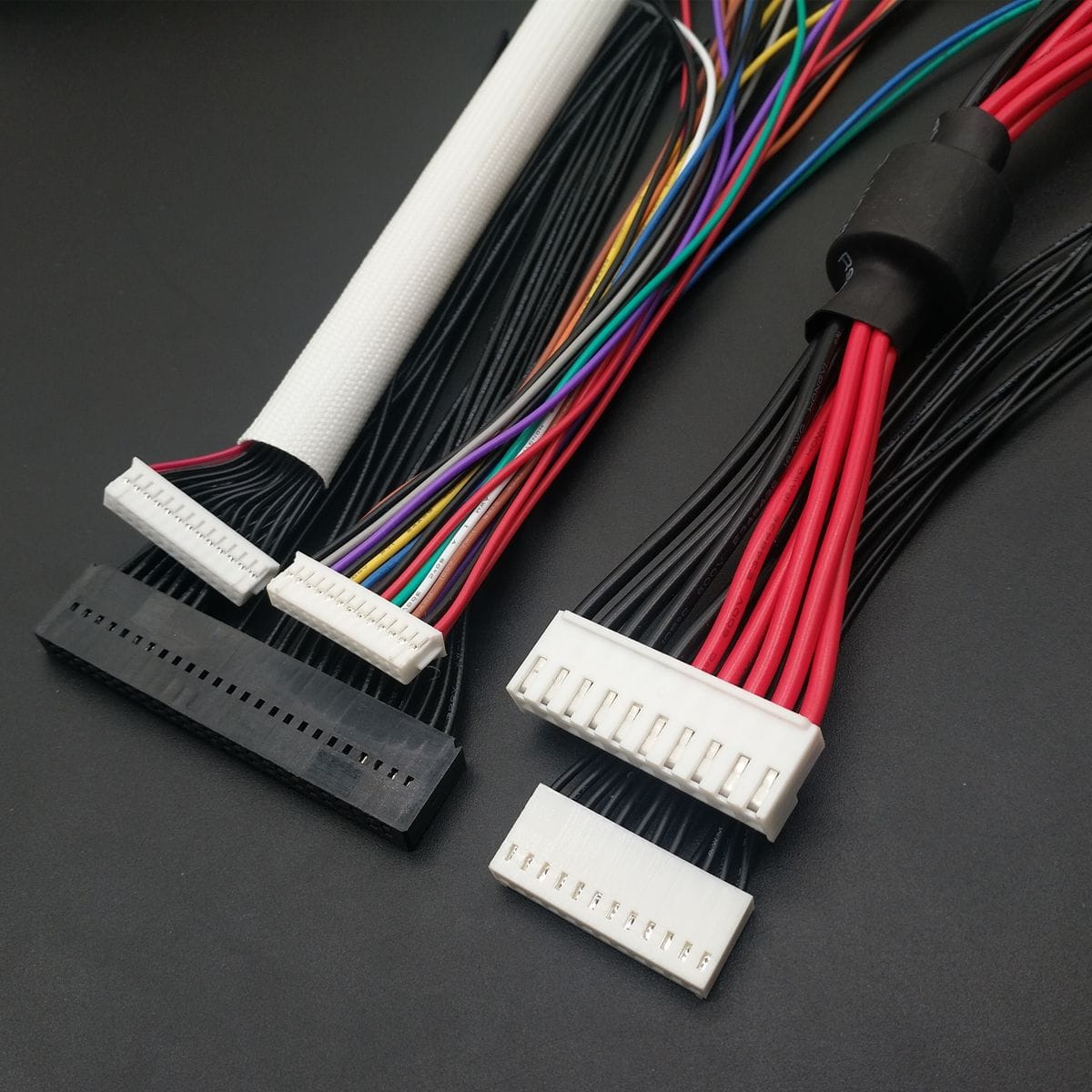
Flexible wire harnesses are critical components in modern robotics, especially in articulated robotic arms, humanoid robots, collaborative robots (cobots), and autonomous systems. These harnesses must survive continuous bending, torsion, vibration, and millions of motion cycles while maintaining stable power and signal transmission.
Why Robotic Joint Cable Harnesses Are Challenging
Robotic joints create one of the harshest environments for cables because they combine:
- Continuous flexing
- Multi-axis torsion
- Tight bending radii
- High acceleration/deceleration
- EMI exposure from motors and drives
- Space limitations inside joints
In robots such as Unitree Robotics humanoids or industrial robots, internal cable harnesses often fail before mechanical components if not properly designed.
Key Design Requirements
1. High Flex Life
Robotic harnesses may experience millions of bend cycles.
Typical requirements:
- 5 million flex cycles for industrial robots
- 10 million cycles for cobots and humanoids
- Continuous torsion resistance
2. Small Bend Radius
Robotic joints usually have very limited internal space.
Common targets:
- Bend radius: 5× to 10× cable OD
- Ultra-thin cable constructions
- Compact connectors
3. Torsion Resistance
6-axis robots create continuous twisting motion.
A robotic cable must survive:
- ±180°
- ±360°
- Sometimes continuous rotational torsion
Common Cable Types Used
Flexible FFC Cables
Flexible Flat Cables are used where:
- Space is extremely limited
- Weight reduction matters
- Signal integrity is important
Applications:
- Humanoid robot joints
- Camera modules
- Compact servo systems
Micro Coax Cable Assemblies
Micro coax is preferred for:
- High-speed data
- LVDS/eDP transmission
- AI vision systems
Applications:
- Robotic vision cameras
- Sensor arrays
- AI edge computing modules
Hybrid Cable Harnesses
Hybrid designs combine:
- Power lines
- Signal wires
- Ethernet
- Fiber optics
- Pneumatic tubing
into a single integrated harness.
Structural Design Techniques
Twisted Pair Routing
Twisted pair structures reduce EMI from servo motors.
Benefits:
- Improved signal integrity
- Reduced noise
- Better high-speed transmission
Strain Relief Design
Proper strain relief dramatically improves cable lifespan.
Common methods:
- Overmolding
- Flexible boots
- Clamp fixation
- Floating cable routing
Torsion Loop Design
Engineers often use controlled torsion loops to distribute stress evenly.
Typical goals:
- Avoid stress concentration
- Prevent conductor breakage
- Improve repeatability
Shielding for EMI Protection
Robotic systems generate strong electromagnetic interference.
Common shielding:
- Aluminum foil
- Braided copper
- Hybrid shielding layers
Applications needing strong EMI protection:
- AI robots
- Medical robots
- High-speed industrial automation
Materials Used in Flexible Robotic Harnesses
Conductors
Common conductor materials:
- Ultra-fine stranded copper
- Tinsel wire
- Silver-plated copper
Higher strand counts improve flexibility.
Insulation Materials
Popular insulation choices:
- TPE
- TPU
- Silicone
- FEP
- PTFE
Each material balances:
- Flexibility
- Abrasion resistance
- Temperature resistance
- Chemical resistance
Reliability Testing
Robotic wire harnesses typically undergo:
| Test | Purpose |
|---|---|
| Bend Testing | Validate flex life |
| Torsion Testing | Verify twisting resistance |
| Drag Chain Testing | Simulate robotic movement |
| Continuity Testing | Detect conductor failure |
| EMI Testing | Validate shielding performance |
| Temperature Cycling | Verify environmental durability |
Applications
Humanoid Robots
Humanoid robots require:
- Ultra-light harnesses
- Compact routing
- High-flex interconnects
Especially important in:
- Neck joints
- Shoulder joints
- Finger actuation systems
Collaborative Robots (Cobots)
Cobots require:
- Long service life
- High reliability
- Safe low-voltage routing
Medical Robotics
Medical robotic systems require:
- Sterilization resistance
- Miniaturized cables
- High reliability
- Low-noise transmission
Applications include:
- Surgical robots
- Endoscopy systems
- Diagnostic imaging robots
Future Trends
AI Robot Cable Systems
Next-generation AI robots demand:
- Higher bandwidth
- Lower latency
- Smaller harnesses
- Integrated sensing
Smart Harnesses
Emerging smart harnesses may include:
- Embedded temperature sensors
- Flex monitoring
- Predictive maintenance capability
Lightweight Hybrid Architectures
Future robots increasingly use:
- FFC + micro coax hybrids
- Fiber + power integration
- Modular harness systems
Conclusion
Flexible wire harnesses are foundational to robotic reliability and performance. As robots become more compact, intelligent, and mobile, cable assemblies must evolve to support higher flex life, tighter routing, and faster data transmission.
Manufacturers specializing in robotic cable assemblies — such as Darlox — are increasingly developing custom solutions for:
- Humanoid robots
- Industrial automation
- Medical robotics
- AI-driven robotic platforms
These advanced harness systems help improve robot durability, reduce downtime, and enable next-generation robotic motion systems.


