
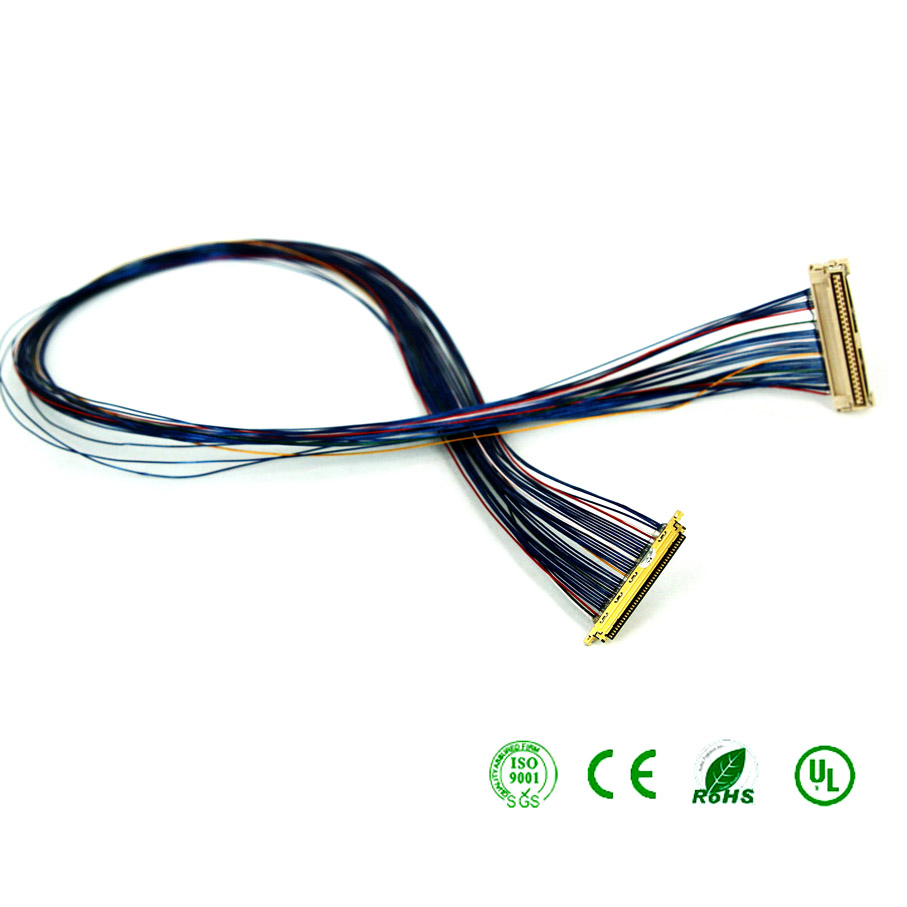
To ensure reliability, companies use a precise, machine-driven process to test cable assembly bending cycles, known as flex life testing. This isn’t done by hand; it’s a controlled laboratory procedure.
The core of the test is a programmable bending machine. The cable assembly is clamped at both ends, with one end moving back and forth in a continuous motion. It is guided over a pulley of a specific diameter, which enforces a consistent bend radius—the most critical factor.During the test, the cable’s electrical conductors are connected to a continuity monitor.
The machine runs tirelessly, often under a simulated load, until a conductor breaks. The moment the circuit opens, the machine stops, and the total number of cycles is recorded as the cable’s flex life.By testing multiple samples in this way, companies can assign a reliable rating (e.g., “5 million cycles”), providing customers with proven data on the cable’s durability for dynamic applications. This process turns the idea of “durability” into a hard, measurable fact.


