
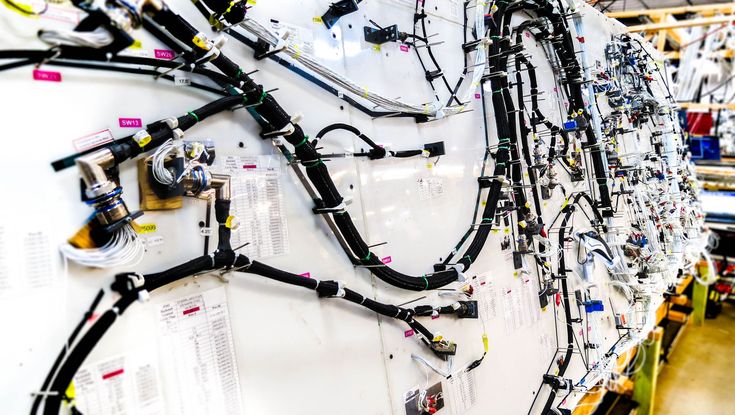
Modern robots, medical devices, industrial automation systems, and moving equipment demand cable assemblies that can survive continuous bending, twisting, and motion. Unlike static installations, dynamic applications place enormous mechanical stress on conductors, insulation materials, shields, and connectors.
A cable failure inside a robot joint or medical device can result in equipment downtime, costly repairs, or system failure. Therefore, designing cable assemblies for millions of flex cycles has become a critical engineering challenge.
What Is Flex Life?
Flex life refers to the number of bending cycles a cable can withstand before mechanical or electrical failure occurs.
One flex cycle typically consists of:
- Bending the cable.
- Returning it to its original position.
Applications may require:
- 1 million cycles
- 5 million cycles
- 10 million cycles
- 50 million cycles or more
High-flex designs are commonly found in:
- Industrial robots
- Collaborative robots (cobots)
- Autonomous mobile robots (AMRs)
- Medical equipment
- Semiconductor machinery
- Automated production lines
Why Cables Fail in Dynamic Applications
Repeated movement creates mechanical fatigue.
Common failure modes include:
Conductor Breakage
Copper strands gradually fatigue and fracture.
Insulation Cracking
Repeated bending can damage insulation materials.
Shield Damage
Foil and braid shields may separate or tear.
Connector Failure
Stress transferred to connector terminations can cause intermittent connections.
Signal Integrity Problems
Impedance variations can affect high-speed signals.
Selecting the Right Conductor
Conductor design has a major impact on flex life.
Fine-Stranded Copper
Advantages:
- Greater flexibility
- Reduced stress concentration
- Improved fatigue resistance
High-flex cables often use hundreds of very fine copper strands.
Bare Copper
Offers excellent conductivity but may oxidize over time.
Tinned Copper
Provides:
- Corrosion resistance
- Improved solderability
- Longer service life
Strand Size Matters
Smaller strands distribute stress more evenly.
| Strand Type | Flex Performance |
|---|---|
| Solid conductor | Poor |
| Standard stranded | Moderate |
| Fine-stranded | Good |
| Ultra-fine stranded | Excellent |
Ultra-fine conductors are commonly used in robotic cable assemblies.
Choosing the Right Insulation Material
TPE (Thermoplastic Elastomer)
Benefits:
- Excellent flexibility
- High abrasion resistance
- Long flex life
TPU (Thermoplastic Polyurethane)
Advantages:
- Oil resistance
- Wear resistance
- Industrial durability
Silicone
Suitable for:
- Extreme temperatures
- Medical devices
- Continuous movement
PVC
Economical but generally less suitable for high-cycle applications.
Cable Construction Techniques
Short Lay Length
Reducing conductor twist length improves flexibility.
Rope-Lay Construction
Conductors are wound around a central member.
Benefits:
- Reduced internal stress
- Better bending performance
Central Strength Member
Some cables incorporate:
- Aramid fibers
- Kevlar reinforcement
These materials absorb tensile forces.
High-Flex Shielding Design
Standard foil shields may crack during repeated motion.
Options include:
- High-flex copper braids
- Spiral shields
- Combination shielding
Shield selection must balance:
- EMI protection
- Flexibility
- Durability
Bend Radius Considerations
A cable should never be bent beyond its minimum bend radius.
General guideline:
- Static applications: 6× cable diameter
- Dynamic applications: 10–15× cable diameter
Larger bend radii significantly increase cable life.
Torsion Resistance
Robot joints often combine:
- Bending
- Twisting
- Rotation
Cable assemblies may experience:
- ±180°
- ±360°
- Continuous torsion
Design considerations include:
- Symmetrical conductor arrangement
- Special cable cores
- Flexible jacket materials
Strain Relief Design
Proper strain relief prevents forces from reaching termination points.
Methods include:
- Molded strain reliefs
- Overmolding
- Cable clamps
- Flexible boots
Poor strain relief is one of the most common causes of cable failure.
Connector Selection
Connectors for dynamic applications should offer:
- Secure locking
- Vibration resistance
- Compact size
- High mating durability
Connector placement should avoid areas of maximum movement whenever possible.
Cable Routing in Robotics
Routing is often as important as cable design.
Recommendations:
- Avoid sharp edges.
- Maintain minimum bend radius.
- Prevent cable twisting.
- Separate power and signal cables.
- Use cable carriers when necessary.
Proper routing can dramatically increase service life.
Testing Methods
Flex Testing
Repeated bending cycles verify durability.
Torsion Testing
Simulates twisting motion.
Drag Chain Testing
Evaluates performance in cable carriers.
Continuity Monitoring
Detects intermittent failures.
Environmental Testing
Assesses:
- Temperature resistance
- Humidity resistance
- Chemical exposure
Applications Requiring High-Flex Cable Assemblies
Industrial Robots
Robot arms continuously move during production.
Collaborative Robots
Cobots require lightweight, flexible wiring.
Medical Equipment
Imaging and surgical systems require reliable motion.
Automated Warehouses
AMRs operate continuously.
Semiconductor Equipment
Precision motion demands highly reliable cables.
Emerging Trends
Several industry trends are increasing demand for high-flex designs:
- Humanoid robots
- Physical AI systems
- Medical robotics
- AI-powered automation
- Compact robotic joints
Future cable assemblies may require:
- 50 million+ flex cycles
- Smaller diameters
- Higher data rates
- Integrated sensing capabilities
How Darlox Supports High-Flex Applications
Darlox provides custom cable solutions designed for dynamic environments, including:
- High-flex wire harnesses
- Micro coax cable assemblies
- FFC and FPC solutions
- Compact robotic cable assemblies
- Shielded high-speed cables
- Custom overmolded assemblies
By optimizing conductor selection, material choices, and mechanical design, Darlox helps customers improve cable reliability in demanding motion applications.
Conclusion
Designing cable assemblies for millions of flex cycles requires a combination of material science, mechanical engineering, and application-specific design.
Fine-stranded conductors, flexible insulation materials, proper strain relief, optimized routing, and rigorous testing all contribute to longer cable life.
As robotics, automation, and AI systems continue to expand, high-flex cable assemblies will become increasingly important for ensuring long-term reliability and performance.


