
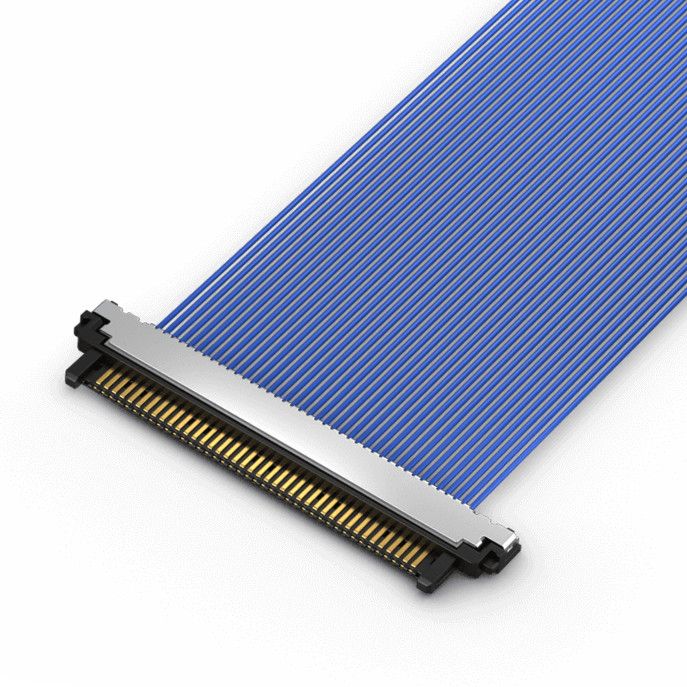
Designing medical cable assemblies is fundamentally different from standard industrial cables. Beyond electrical performance, you must meet strict patient safety, biocompatibility, sterilization, and regulatory compliance requirements.
Here’s a clear, engineering-focused guide to the key design requirements and standards 👇
1. Safety & Regulatory Compliance


6
Medical cables must comply with globally recognized safety standards.
Core standards:
- IEC 60601-1
→ Covers electrical safety, leakage current, insulation - ISO 10993
→ Ensures materials are safe for skin/patient contact - RoHS Directive
→ Limits toxic materials (lead, mercury, etc.) - REACH Regulation
Key design focus:
- Patient isolation (especially for diagnostic cables)
- Low leakage current
- Double/reinforced insulation
2. Biocompatible Materials


7
Materials must be safe for human contact, sometimes long-term.
Common materials:
- Silicone → soft, flexible, skin-safe
- TPU (Thermoplastic Polyurethane) → durable, abrasion-resistant
- TPE → cost-effective alternative
Requirements:
- Non-toxic, non-irritating
- Resistant to body fluids
- No harmful plasticizers
3. Sterilization Compatibility


6
Medical cables often undergo repeated sterilization.
Supported methods:
- Autoclave (steam, high temp)
- EtO (Ethylene Oxide gas)
- Gamma irradiation
Design considerations:
- Material must not degrade, crack, or discolor
- Maintain flexibility after cycles
- Connector sealing must remain intact
4. Shielding & Signal Integrity


8
Medical signals (e.g., ECG, imaging) are extremely sensitive.
Requirements:
- Low EMI (Electromagnetic Interference)
- Stable signal transmission
- Minimal noise
Techniques:
- Twisted pair design
- Foil/braid shielding
- Proper grounding (drain wire)
5. Mechanical Reliability & Flex Life


6
Medical cables are frequently bent, pulled, and moved.
Key features:
- High flex life (thousands to millions of cycles)
- Reinforced strain relief
- Overmolding for durability
Typical failure points:
- Connector junction
- Repeated bending areas
6. Cleanability & Chemical Resistance


7
Hospital environments require frequent cleaning.
Design needs:
- مقاومة (resistance) to:
- Alcohol
- Bleach
- Disinfectants
- Smooth outer jacket (no dirt traps)
- Optional antimicrobial coatings
7. Connector Design & Ergonomics


8
Connectors must be safe and easy to use in clinical settings.
Consider:
- Touch-safe design
- Color coding for quick identification
- Push-pull locking mechanisms
- Compact size for dense equipment
8. Standards for Testing & Quality
Common validation tests:
- Dielectric withstand test
- Flex/bend cycle testing
- Tensile strength test
- Aging & sterilization cycle testing
Quality systems:
- ISO 13485
→ Required for medical device manufacturers
9. Application-Specific Requirements
Different medical applications demand different cable designs:
Diagnostic equipment (ECG, EEG)
- Ultra-low noise
- Lightweight cables
- High flexibility
Imaging systems (ultrasound, endoscopy)
- High-speed data transmission
- Shielded coax or micro-coax cables
Surgical devices
- Sterilization-resistant
- High durability
10. Custom Medical Cable Design
In most cases, custom cable assemblies are required.
Customization includes:
- Cable length & routing
- Connector types
- Shielding structure
- Jacket material
- Overmolding design
Quick Design Checklist ✅
Before finalizing your medical cable assembly:
- ✔ Meets IEC 60601-1
- ✔ Uses biocompatible materials (per ISO 10993)
- ✔ Supports required sterilization method
- ✔ Provides strong EMI shielding
- ✔ Designed for high flex life
- ✔ Resistant to cleaning chemicals
- ✔ Built under ISO 13485
Final Thoughts
Medical cable assembly design is a balance between safety, performance, and durability. Even small design decisions—like material choice or shielding—can directly impact patient safety and device reliability.
For high-end applications (like imaging or surgical systems), working with experienced manufacturers and validating against international standards is essential.


